Mauritius slowly moves to demolish asbestos legacy

However union leaders are cautious. A parliamentary declaration is not a demolition order. The struggle over Mauritius asbestos houses, they say, is not over yet.

According to historical records, when cyclones Carol and Alix tore through Mauritius in 1962, they left devastation on a scale the island had rarely seen with eight people dead, over a hundred injured and 100 000 people left homeless. Nearly all the workers’ settlements in their path were flattened. The government’s response was swift: 3,113 social houses were immediately built to resettle the displaced.

However, the material chosen was a mixture of cement and asbestos which was cheap, durable and widely used across the British colonies then. Sixty years later, the people living in those houses are still paying for that decision with their lungs. In Mauritius, where residents of the social estates have lived alongside deteriorating asbestos panels for six decades, the full toll of the 1962 construction programme may not yet be visible in the mortality data.

Although Mauritius has banned asbestos imports through the Consumer Protection Act, the Dangerous Chemicals Control Act and the Constitution the restrictions have since been waived by law amendments, a move that unions have condemned. Further, Mauritius has not ratified International Labour Organization (ILO) Asbestos Convention 162 which calls for the substitution and elimination of asbestos, medical surveillance and compensation for workers exposed to asbestos, the right of workers to information about asbestos hazards, safe removal and disposal procedures and the responsibility of employers and states to prevent exposure at source.

The IndustriALL executive committee supported the call, by 12 African countries, to amend the Rotterdam Convention to include chrysotile asbestos on the list of hazardous industrial chemicals and has demonstrated against the asbestos trade.

A death that changed everything

The unions’ campaign origins lie in a case that exposed the scale of what the authorities had ignored. Claude Marguerite, a union member and resident of one of the asbestos estates, died of mesothelioma, in 1999, an aggressive cancer of the lining of the lungs and chest wall caused by asbestos exposure. After his death, the CMWEU went to the Supreme Court of Mauritius to obtain permission to exhume his body. It was a legally and emotionally tense decision, but the union’s leadership judged that without hard scientific evidence, the authorities would continue to look away.

Working with the University of Manchester, researchers conducted an asbestos fibre count on 10 grams of Marguerite’s lung tissue. The results were stark: 86,000 asbestos particles were identified. The findings gave the union the evidence it needed and ignited a mass public awareness campaign that would force the government to act.

A disease that does not forgive

According to the World Health Organization and International Agency for Research on Cancer guidance, asbestos is not a single hazard but a cluster of them. Prolonged exposure to its microscopic fibres, which lodge permanently in lung tissue and cannot be expelled, causes a range of serious and fatal conditions. Mesothelioma is the most feared: it typically presents decades after exposure, responds poorly to treatment and carries an average survival rate of about a year from diagnosis. Asbestosis, a chronic scarring of the lung tissue, causes progressive breathlessness and has no cure. Lung cancer risk is significantly higher in those exposed to asbestos.

Two decades of silence

In 2001 the government persuaded in part by the union campaign agreed to commission a national investigation into the adverse impact of asbestos. A Commonwealth asbestos expert, John Addison, was brought in to lead it. He had previously worked alongside Reeaz Chuttoo, then CMWEU’s technical adviser, on the decommissioning and asbestos removal at a sugar factory in Beau Plan in the Northern district of Pamplemousse.

The report has never been made public. No government, in 24 years, has dared to table it in parliament. The reason, union officials say, is that the report’s findings would expose the state to substantial civil damages claims from the asbestos houses’ residents, as well as from the thousands of workers who spent careers in sugar factories, hospitals, schools and other public and private sites where asbestos was usually used. The liability calculation, rather than the public health imperative, has driven successive governments’ approach to making the Addison report public.

“This is a declaration of good intentions by the government of Mauritius. We will be watching every step of the implementation. A vote is not a bulldozer. We will be in the streets, in the courts and in parliament until the last asbestos panel comes down and the families and communities are compensated,”

said Chuttoo, now CTSP president.

Paule-France Ndessomin, IndustriALL regional secretary for Sub-Saharan Africa emphasized:

“Convention 162 on asbestos is clear that states must protect workers from exposure, compensate those harmed and eliminate the hazard at source. Mauritius has an obligation, not a choice, to demolish these houses and be accountable to the affected families and communities and release the Addison report.”
Give workers a vision and they will help with solutions

That is the central argument coming from the Southern African Clothing and Textile Workers’ Union (SACTWU), whose organizers are grappling with a question that global policy forums rarely answer. Specifically, how do you make a Just Transition relevant to workers who have never of heard the term? Simon Eppel, SACTWU research director who was in the room when the Just Transition manifesto for the textile and garment supply chain was launched, knows the gap between policy and factory floor.

“The Just Transition stuff right now is like preaching. You’ve got to do something about climate change. But there’s no incentive for workers to take the risk. Give them an incentive,”

he says.

The problem with reskilling in an economy without jobs

The Just Transition manifesto calls for reskilling and redeployment as central pillars of a Just Transition. SACTWU broadly supports these demands. However, they raise a critical challenge that is often overlooked in global policy discussions: reskilling only works where there are jobs to reskill into.

“Traditionally the most prominent part of the Just Transition concept is about reskilling and replacing workers. And that works in an economy of full employment. It just doesn’t work as well in the Global South,”

Simon Eppel explains.

In South Africa, unemployment is among the highest in the world. Therefore, asking workers to accept job losses on the promise of future opportunities is asking them to gamble with their livelihoods. SACTWU’s argument is to broaden the Just Transition vision beyond jobs. They want to include giving workers a stake in the assets required for decarbonization and sustainable production.

“Poverty is not only income-related. It is also asset-related. In a future of economic, climate, technology shocks and more we need to think about how to make workers more resilient, including by having assets that earn workers incomes, not only jobs.”

A practical vision: workers as co-owners

SACTWU is already developing models. The union is building an education programme that starts with problems workers already understand, like coal-fired boilers in textile factories that damage their health. Then it aims to build toward collective solutions.

“You start with the coal-fired boiler. Workers breathe that in every day. You make the link between their health, their community and the broader climate challenge. Then you come with solutions,”

Simon Eppel says.

One such solution involves replacing coal boilers with solar thermal technology, dramatically reducing fuel consumption. But crucially, SACTWU argues that workers should benefit not only from this change, but from owning a share of it.

“Why is the union movement not conceiving models where workers are enabled to buy machines, the boss rents it from them and they earn a nominal rent every month? This model could be marketed to European buyers as sourcing from factories who practice sustainable green growth,”

Simon Eppel challenges.

This is a vision the union believes workers could get behind. Not sacrifice, but shared opportunity.

What the Global South needs from the Global North

South Africa’s retail-textile value chain moves at a different pace from Europe’s. Local retailers are not yet demanding sustainable fibres or circular production models. This means the market pressure driving transition elsewhere simply does not exist here yet. But SACTWU is clear that this cannot be an excuse to wait.

“Left to its own devices, our local system will push us slowly. If we want to take advantage of the opportunities, we must push the system to move faster,”

Simon Eppel says.

To do that, the Global South needs three things from the Global North: recognition that different contexts require different pathways, affordable financing and more crucially long-term purchase commitments from global buyers.

“If buyers say, we’ll give you orders, not for six months, but a three-year commitment and here is money and exposure to technology then factories can make the changes. That is what you need to build businesses and jobs and to enable the transition,”

he adds.

Without that demand signal from Northern buyers, even willing factories cannot justify the investment in green technology.

Moving from defence to offence

Historically, unions have been defensive by nature, protecting what exists. It is a shift that Simon Eppel, who has spent years working with garment workers on the Cape Flats, believes unions cannot afford to avoid.

“You can’t purely be defensive. You need to be offensive too. If we simply defend against risks, the nature and direction of change will be defined for us and we will lose the chance to shape the future as different from the present. To be offensive, you need an alternative world you are putting forward,”

he explains.

That means experimenting, sharing what works across unions globally and being willing to take risks even when the outcome is uncertain. SACTWU is now raising funds for an education and pilot project programme and identifying factories where new models could be tested.

A transition that works for everyone

The Just Transition manifesto sets out bold demands for brands, employers and governments. SACTWU supports the direction but insists that unless those demands are grounded in the lived reality of workers in the Global South, they risk remaining exactly that: demands on paper.

“You don’t have to learn basic human behaviour and human need. You just need to think about workers as people rather than as policy,”

he says.

For SACTWU, a Just Transition is not a compliance exercise or a green marketing opportunity. Instead, it is a chance to build a new relationship between workers, technology and ownership. This is one where the people who make our clothes also have a stake in the future of the industry that depends on them.

African trade unions seek a seat at the climate table

The initiative was developed with IndustriALL Sub-Saharan Africa (SSA) regional office and the Sub-Saharan Africa energy network. It also involved IndustriALL affiliates in Ghana, ITUC-Africa, the Nigeria Labour Congress and the Ghana Trade Union Congress. The aim is to embed workers’ safeguards more firmly into Africa’s climate policies.

The workplan for the subsidiary body (SB64) sessions and COP 31 includes several steps. These include establishing an AGN-trade union Just Transition Work Programme (JTWP) liaison group with formal terms of reference. Moreover, they involve compiling sector-specific evidence briefs on employment, reskilling, critical minerals and informal workers. They also involve delivering joint pre-sessional briefings. Further, submitting joint evidence to the secretariat’s mapping process on sovereignty-designed pathways is scheduled. Developing a unified African labour position paper on the JTWP, border adjustment mechanisms and equitable value chains is also planned. Additional activities include convening a COP 31 side event on African workers and the just transition. Another step is reviewing and institutionalizing the AGN labour liaison mechanism.

The meeting heard that finance lies at the heart of the grievances. SSA receives less than 3 per cent of global climate finance annually. Much of it comes in the form of loans rather than grants. Trade unions rejected the use of loans as climate contributions. They argued that they risk deepening the continent’s debt crisis. Interest rates in the region are roughly seven times higher than those in Organization for economic co-operation and development (OECD) countries. To close this gap requires serious reform of multilateral development banks. This was argued by unions.

Drawing on the African mining vision, participants demanded that critical minerals such as lithium and cobalt be processed locally. This would generate decent, job-rich growth instead of raw exports.

Trade as a tool of exclusion

Unions raised concerns over the European Union’s Carbon Border Adjustment Mechanism, arguing that it risks shifting the costs of the energy transition onto African producers and workers. They also rejected product bans and green subsidies that function as trade barriers. Instead, they insisted on national rights to build regional value chains under the African Continental Free Trade Area.

Protecting workers and gender justice

Influenced by South Africa’s Just Energy Transition experience, unions called for negotiated transitions featuring five-year notice periods for fossil-fuel phase-outs and wage parity for affected workers. A recurring theme was the need to protect the continent’s large informal workforce. They pushed for International Labour Organization(ILO) standards to be explicitly linked to climate finance. In particular, unions want attention to opportunities and rights for women and youth in the green economy. Unions also called for the full funding of the Gender Action Plan to address the disproportionate impact of climate disasters on women.

The meeting, convened with support from IndustriALL, Danish trade union 3F and Friedrich Ebert Stiftung Senegal, brought together 20 participants from Ghana, Nigeria, Senegal, South Africa, Zambia and Zimbabwe. Civil-society delegates from Gambia and Senegal also attended.

“AGN commits to the systematic integration of labour, deepening of open conversations, engaging key stakeholders and providing a platform and guidance during negotiations,”

said Antwi-Boasiako Amoah, AGN chairperson.

Paule-France Ndessomin, SSA IndustriALL regional secretary emphasized:

“The conversation on climate change is shifting to the protection of workers and community interests. For African trade unions, the just energy transition is a fight against new green extractivism.”

Class action lawsuit for South African coal miners

The South African coal miners class action lawsuit focuses on lung diseases such as coal worker’s pneumoconiosis, silicosis, tuberculosis and chronic obstructive pulmonary disease whose conditions have long been associated with coal mining. For most workers, the consequences have been devastating and include the loss of employment, permanent disability and premature death. In the coal towns of Mpumalanga, dust has settled for decades on roofs, roads and lungs, leaving a legacy of illness that stretches across generations. Notably, the South African coal miners class action lawsuit seeks justice for those impacted by these diseases.

Fight for health and safety

The National Union of Mineworkers (NUM), affiliated to IndustriALL Global Union, argues that the lawsuit by human rights lawyer Richard Spoor, is important to workers and coal mining affected communities. The union says the case exposes a pattern of corporate negligence in which workers were left unprotected from hazardous dust levels, inadequate ventilation and weak enforcement of occupational health and safety standards. Also, South African coal miners’ rights are at the center of this class action lawsuit, which is raising urgent questions about corporate responsibility.

The NUM says the class action is more than a lawsuit. But a demand that the law be enforced and that companies be held to account. Further, that the talk on ensuring compliance on human rights due diligence principles and guidelines across the supply chains becomes something real for the workers and communities who are affected by coal mining. For many, the stakes in the South African coal miners class action lawsuit could not be higher.

“For decades, mineworkers and their communities have carried the burden. This is about dignity and safety and ending the idea that workers must suffer so others may profit,”

said Masibulele Naki, NUM’s national secretary for health and safety. This sense of injustice has become a driving force behind the class action lawsuit involving South African coal miners.

Coal mining has left a trail of respiratory disease, contaminated water and environmental decay. NUM argues that mining companies must now answer for the harm and engage directly with workers and communities whose lives have been affected by their operations. To illustrate, the South African coal miners class action lawsuit highlights these long-standing issues.

Demand for accountability

The union is urging government to strengthen oversight, enforce compliance and ensure that regulatory failures are not repeated. Moreover, the South African coal miners class action lawsuit calls on authorities to protect vulnerable mineworkers and their families.

“Health and safety start with workers and communities but more importantly mining companies owe these two groups a duty of care, and that is why unions must back this class action,”

said Emmanuel Adjei Danso, IndustriALL director for mining and energy.

In short, all eyes are on the ongoing South African coal miners class action lawsuit as it aims to establish accountability and offer hope for lasting change.

Unions fight for Ekapa workers as mud rush mine faces liquidation

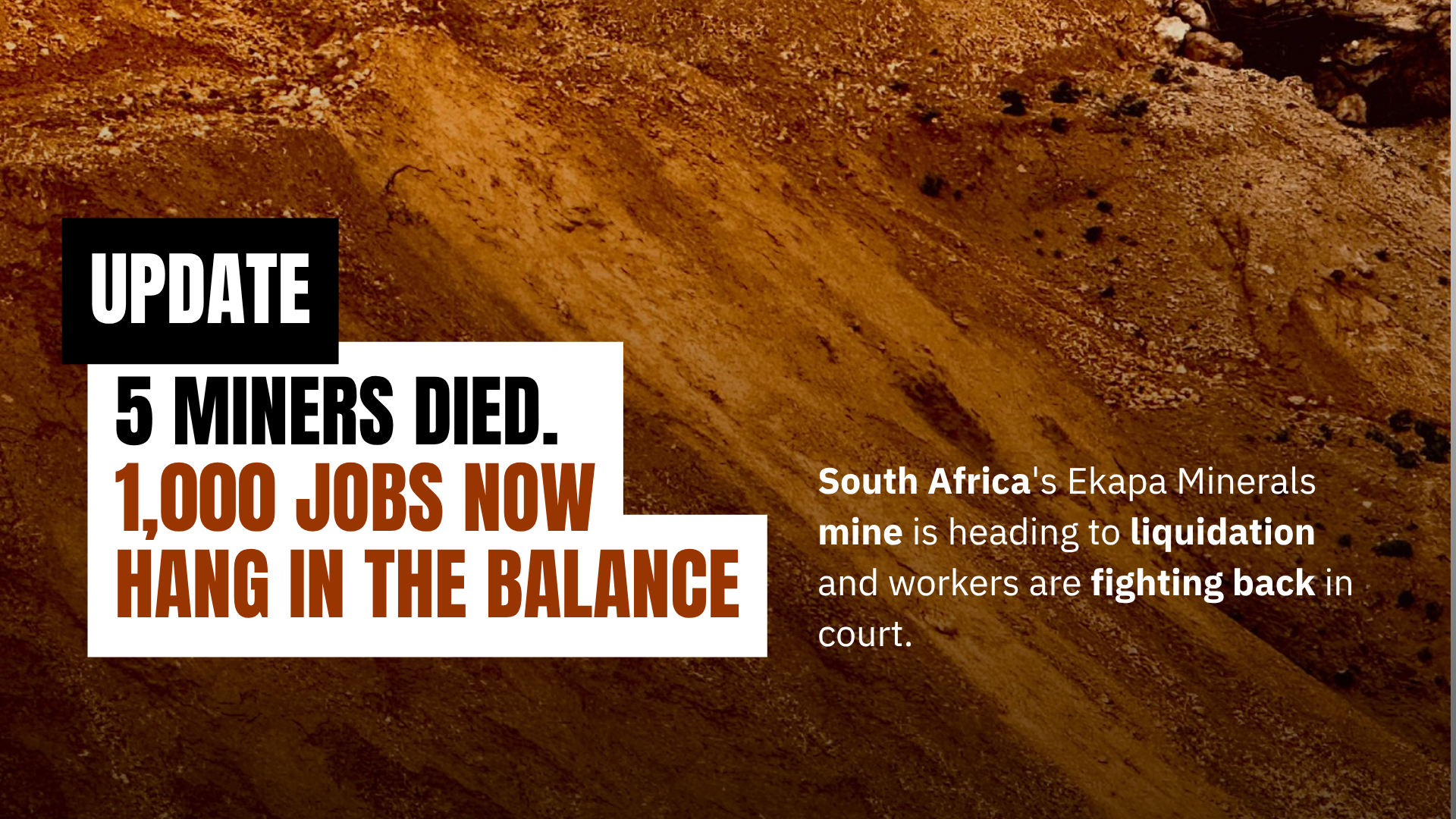
On 17 March, South Africa’s Northern Cape High Court extended Ekapa Minerals’ provisional liquidation rather than granting a final order, postponing the matter to 30 October. The delay follows a challenge by the National Union of Metalworkers of South Africa (NUMSA), which argued that business rescue would preserve more than 1,000 jobs. Liquidation will only cost jobs and harm workers.

NUMSA, affiliated to IndustriALL Global Union, said Ekapa has mishandled its finances and violated workers’ rights. Around 400 workers have not been paid since November 2025 and are unable to access the Unemployment Insurance Fund. Attempts to secure TERS support have been met with little cooperation from the employer, the union said. In February, 196 workers were retrenched. Workers have since been granted access to 50 per cent of their pension savings — a short-term measure at best.

The union also accuses Ekapa of violating labour legislation, including the Labour Relations Act and the Basic Conditions of Employment Act. Proposals to retrain and upskill workers were rejected by the company.

Mud rush reflects deeper patterns of neglect

The mud rush that killed five mineworkers has cast a shadow over Ekapa’s liquidation and raised serious questions about the company’s adherence to safety protocols. NUMSA says the deaths reveal a deeper pattern of neglect by a company unable or unwilling to invest in managing increasingly unstable geological conditions.

The Department of Mineral and Petroleum Resources (DMRE) has taken a cautious and slow approach. Following the mud rush, inspectors issued directives halting operations in affected sections and demanded geotechnical assessments and compliance reports. An investigation was launched into whether Ekapa had followed mandatory codes of practice on rock engineering and underground stability.

But unions argue that the DMRE’s interventions are reactive rather than preventive. Oversight tightened only after fatalities and operational collapse, leaving workers exposed.

The Parliamentary Portfolio Committee on Mineral Resources and Energy conducted an oversight visit to Kimberley, meeting workers, unions and local authorities. MPs expressed concern about unpaid wages, the liquidation process, and the adequacy of safety systems prior to the mud rush. They want the DMRE to strengthen enforcement and to clarify whether business rescue could offer a safer, and better deal to workers than liquidation.

Managing geotechnical shifts

Diamond mining in Kimberley’s ageing mines is increasingly vulnerable to geotechnical instability. As underground mines deepen and intersect with old mines, the risk of mud rushes, rockfalls and sudden ground movement rises. Mining specialists point to several measures that could mitigate such risks. They want the DMRE to strengthen enforcement and clarify whether business rescue would offer workers a better deal than liquidation. Mud rushes often originate from flooding which can be controlled by improved drainage to reduce sudden inflows of water. Further, backfilling with material stabilises the rock mass and reduces collapse risk.

Andile Zitho, NUMSA regional secretary for the Northern Cape and Free State said:

“The postponement shows the court is seeing through the employer’s tactics and this opens the door to a fairer, more sustainable future for Kimberley, Ekapa and its diamond workers.”

Emmanuel Adjei-Danso, IndustriALL director for mining and energy said:

“We applaud NUMSA for defending livelihoods at Ekapa. Liquidation must not be a licence to impoverish workers.”

Update Ekapa mines

Unions fight to save 2,400 jobs in South Africa’s ferrochrome sector

In South Africa’s ferrochrome sector, where once-bustling smelters now lie dormant, unions are fighting to save jobs. The sector, long a pillar of the country’s mineral beneficiation programmes, has fallen idle due to high electricity costs and under-utilization. At present, only 11 of the country’s 66 ferrochrome furnaces are operational.

Unions secure tariff deal

After intensive lobbying, a modest breakthrough appeared on 27 February 2025 when Glencore-Merafe Chrome and Samancor Chrome secured an agreement with Eskom, the state-owned power utility, to pay R0.62 (US$0.033) per kilowatt-hour instead of the R0.877 (US$0.047) approved in January. The tariff had previously stood at R1.36 (US$0.073) per kilowatt-hour, according to NUM. Eskom granted the reduction on condition that smelters that had been shut down be brought back into production, subject to a five-year contract, annual tariff reviews, revenue-recovery mechanisms and other safeguards designed to protect the utility’s own precarious finances.

Companies press ahead with retrenchments despite tariff deal

The apparent compromise has quickly soured. The companies are dissatisfied with Eskom’s conditions, arguing against the long-term commitments and adjustment clauses. Rather than reopening idle furnaces, management has signalled its intention to proceed with retrenchments. The unions accuse the employers of negotiating in bad faith: after securing the lower tariff, Glencore-Merafe Chrome and Samancor Chrome are now backing away from commitments to job preservation and capacity restoration.

NUM expressed shock and disappointment, particularly over Samancor’s decision. “This move comes as a devastating blow to the workforce,” the union said, “particularly after NUM fought tirelessly to negotiate for lower electricity tariffs to ensure the sustainability of the company’s operations.”

NUMSA general secretary Irvin Jim is demanding the immediate withdrawal of all Section 189 notices, the reopening of mothballed smelters and a return to genuine negotiations with Eskom over the disputed conditions.

Jobs at stake in a country with 43 per cent unemployment

The stakes extend well beyond the two companies. South Africa’s extended unemployment rate stands at over 43 per cent. The destruction of thousands of formal-sector jobs carries significant knock-on effects for household incomes, local economies and social stability.

Paule-France Ndessomin, IndustriALL regional secretary for Sub-Saharan Africa, said:

“South Africa cannot afford to lose these jobs. With unemployment already at over 43 per cent, every formal-sector job that disappears takes a family’s income with it. These companies have a responsibility to their workers and to the communities that depend on them. Walking away from that responsibility is not a business decision, it is a social one, and IndustriALL is in full support of its affiliates NUM and NUMSA in their fight to save jobs.”

Yaoundé’s thin harvest: WTO ministers meeting delivers little gains for Africa

WTO reform, e-commerce, fisheries subsidies, agriculture, and the least-developed countries package was deferred back to Geneva, Switzerland, for further work.

The outcome disappointed trade unions and civil society organizations, who had their own parallel meetings, and hoped that the meeting would deliver real progress on long-standing development concerns. Instead, it exposed sharp differences over policy space for developing countries, the future of digital trade, and the balance between multilateral interests and national sovereignty.

Deadlock over digital duties

The most visible stalemate concerned the long-standing moratorium on customs duties on electronic transmissions. The moratorium, in place since 1998, prevents members from taxing cross-border digital products such as software, music or e-books. Traditionally renewed every two years, the moratorium lapsed after ministers, who are the WTO’s highest decision-making body, failed to agree on an extension.

The United States initially pushed for a permanent ban, later offering a five-year renewal. Brazil insisted on sticking to the two-year norm, arguing that a longer freeze would limit developing countries’ ability to generate revenue and shape digital policy. The related moratorium on non-violation and situation complaints under the Trade-Related Aspects of Intellectual Property Rights (TRIPS) agreement also expired without renewal.

Trade unions including ITUC, IndustriALL Global Union, Public Services International, and African civil society organisations including the Africa Trade Network, viewed the failure as a reflection of deeper imbalances in the WTO frameworks. Most argued that a permanent or extended moratorium would disproportionately benefit large digital exporters while limiting options in economies still building their digital infrastructure.

Missed opportunity for agriculture

Agriculture, a priority for African and other developing members, again yielded no concrete advances. No decisions were reached on domestic support, market access, public food security or the special safeguard mechanism. The long-standing demands of the Cotton-4 countries (Benin, Burkina Faso, Chad, and Mali) on subsidies also went unaddressed. The United States had blocked progress on agriculture earlier in the conference, calling for a fundamental reset of the negotiations.

Another flashpoint was on the proposed incorporation of the Investment Facilitation for Development Agreement into the WTO rulebook. Trade unions and civil society warned that formal adoption risked undermining the consensus-based nature of the organisation.

Trade union and civil society representatives pointed to the African Continental Free Trade Area Investment Protocol as a more suitable regional framework, arguing that it avoids adversarial international arbitration and better protects domestic investors.

Paule-France Ndessomin, IndustriALL regional secretary for Sub Saharan Africa said the meeting is a missed opportunity to expand industrial policy space for decent job creation, particularly for Africa’s youthful population in line with the Marrakech Agreement which established the WTO.

“Fairer and more equitable trade rules that create jobs and prioritize African workers and communities are needed as pathways going forward,”

she said.

Strengthening union organizing efforts in Nigeria’s manufacturing industries

Discussions during the mission, 9-11 March, focused on persistent violations of freedom of association and collective bargaining rights, particularly at Chinese-owned firms. This happened alongside widespread decent-work deficits, precarious working conditions, the erosion of living wages and legal obstacles to union recognition most notably at Dangote Industries. Delegates and affiliates also examined challenges in defending workers’ rights along supply chains and strategies to increase union density.

The mission coincided with an International Women’s Day event in Lagos hosted by the National Union of Textile, Garment and Tailoring Workers (NUTGTW) on 11 March under the theme: Rights. Justice. Action. For all women and girls.”

Policy responses for economic development

The IndustriALL mission heard that Nigeria’s manufacturing revival faces formidable structural challenges. Chronic energy shortages, rooted in ageing infrastructure and recurrent national-grid collapses, continue to throttle industrial output. Early this year, about 16 power plants were offline at once, leaving generation at about 4,000 MW despite far higher installed capacity. 

The cost-of-living crisis has further eroded real incomes. The national minimum wage of ₦70,000 (US$51) per month, introduced in 2024, has been rapidly overtaken by persistent inflation, prompting the Nigeria Labour Congress to demand an urgent review in 2026. Youth unemployment remains high, compounding social pressures in a country where the informal economy still dominates.

However, policy initiatives supported by unions offer pathways forward. For example, the government’s National Cotton, Textile and Garment (CTG) policy seeks to revive a once-vibrant value chain from farm to factory through targeted financing via the Bank of Industry. The establishment of a dedicated development board aims to curb billions of dollars in annual garment imports and generate much-needed jobs. Broader industrialisation efforts emphasise the untapped potential of Nigeria’s oil and gas reserves, particularly through the Decade of Gas programme, to power domestic manufacturing and position the country as a regional energy hub.

Regional and international trade agreements could amplify these gains. The African Continental Free Trade Area (AfCFTA) promises expanded market access and the development of cross-border value chains. Further, the African Growth and Opportunity Act (AGOA), recently renewed for one year, provides tariff-free entry into the US market for eligible goods.

The unions said the levels of unionization in Nigerian manufacturing remain modest, reflecting both legal and practical barriers to organising.

“There are great opportunities to deepen organizing across most manufacturing sectors in Nigeria. For this to materialise, respect for trade-union rights and genuine collective bargaining is essential,”

said IndustriALL assistant general secretary, Kemal Özkan.

The delegation included Rose Omamo, IndustriALL vice president, and Paule-France Ndessomin, the regional secretary for sub-Saharan Africa.

IndustriALL’s Nigerian affiliates are the Chemical and Non-Metallic Products Senior Staff Association (CANMPSSAN), the National Union of Petroleum and Natural Gas Workers (NUPENG), the National Union of Textile, Garment and Tailoring Workers (NUTGTW), the Petroleum and Natural Gas Senior Staff Association (PENGASSAN), the National Union of Chemical, Footwear, Rubber, Leather and Non-Metallic Products Employees (NUCFLNANMPE), the Steel and Engineering Workers Union of Nigeria (SEWUN), the National Union of Electricity Employees (NUEE) and Dangote.

Unions voice concerns over Anglo American restructuring

After fending off BHP’s hostile bid worth over US$40 billion in 2024, Anglo American chose to streamline. It shed nickel and steelmaking coal assets. The demerger of its platinum business into Valterra Platinum wrapped up in May 2025.

Talks drag on for the sale of De Beers, eyed for completion in 2026. Meanwhile, Anglo American merged with Canada’s Teck Resources to create Anglo Teck, a major copper player.

Workers at Valterra Platinum in South Africa and Zimbabwe, and at De Beers in Botswana and Namibia, demand firm protections. These cover freedom of association, collective bargaining and maternity rights. They insist on a just transition that honours their benefits and interests.

The demands emerged under the existing memorandum of understanding between IndustriALL and Anglo American. The MoU covers dialogue on health and safety, ending gender-based violence and harassment, sustainable mining which includes environmental, social, and governance issues. 

The global dialogue tackles new technologies, training, retraining, a Just Transition for coal workers and compliance with the Initiative for Responsible Mining Assurance (IRMA).

Key worries surfaced. IRMA audits flagged respiratory risks and exposure issues at Sishen in South Africa. Unions pointed to ageing equipment at Kumba Iron Ore’s Kolomela mine. At Unki mine in Zimbabwe, power cuts weaken ventilation without backups, raising accident risks.

Workers are anxious

Anxiety runs high during disposals. Workers at De Beers in Botswana and South Africa feel lost. Voluntary retrenchment packages for over 1,000 in Botswana triggered panic — refusing might mean no job. “Workers at Joaneng and Orapa feel like lost sheep in the bush,” said Fenellah Thebe from Debswana.

Stephen Smyth, general vice president of Australia’s Mining and Energy Union, highlighted success in Australia. Unions and Anglo American jointly embraced global health standards, hazard identification and risk management on the continent.

Kemal Özkan, IndustriALL assistant general secretary, stressed full MoU adherence. The MoU upholds global dialogue, collective bargaining and union voice. Anglo American’s policies and culture must address legacy issues in transitions, he said, especially for workers in critical raw materials as well as maintaining industrial harmony. 

He emphasized that

“the current global dialogue is essential for aligning IndustriALL’s strategies with corporate changes, ensuring that demergers do not erode hard-won gains in labour rights, fair transition frameworks, and inclusive industrial policies across Southern Africa.” 

He further explained that it is the expectation that Anglo’s description on searching for like-minded takeover for diamond operations reflects the standards and values of the company in terms of their operation as well maintaining Industrial harmony and cooperation with its stakeholders. 

The meeting covered demerged entities like Valterra Platinum and Unki. Concerns include contractor labour-broking at Unki evading collective agreements, casualisation blocking benefits, rising silicosis claims at Mogalakwena, and for embracing of human rights due diligence by sub-contractors.

Gender mainstreaming and addressing gender-based violence and harassment

On gender, Anglo American reported 38 per cent women in top management and progress via its Living with Dignity hub — reporting of GBVH jumped to 75 from 10-20 per cent. Unions called for harmonising company policies with collective bargaining and ending bullying and harassment.

IRMA findings at Sishen and Kolomela revealed gaps: inconsistent risk assessments, training gaps, weak respiratory programmes, and worker reluctance to refuse unsafe work.

Delegates urged Anglo American to ensure “like-minded” buyers uphold standards. They pushed for extended dialogue covering Anglo Teck and future partners not yet under the MoU.

Unions stay cautiously optimistic. Anglo Teck’s copper projects in Chile and Peru, alongside iron-ore expansion in Brazil, should create more jobs than they cut.

Collective bargaining changes lives for South African workers

“We are workers by day, family members at home and community members by night,”

one delegate told the conference. The remark underscored the many roles workers juggle and why collective bargaining matters beyond the factory floor.

SACTWU, an IndustriALL Global Union affiliate, held the event from 7 to 9 March under the theme: unity, jobs, growth and service to members.

The union has more than 100,000 members across sectors including clothing, footwear, tanning, laundry, farming and agro-processing and was formed in 1989.

Newcastle: when the rule of law collapses

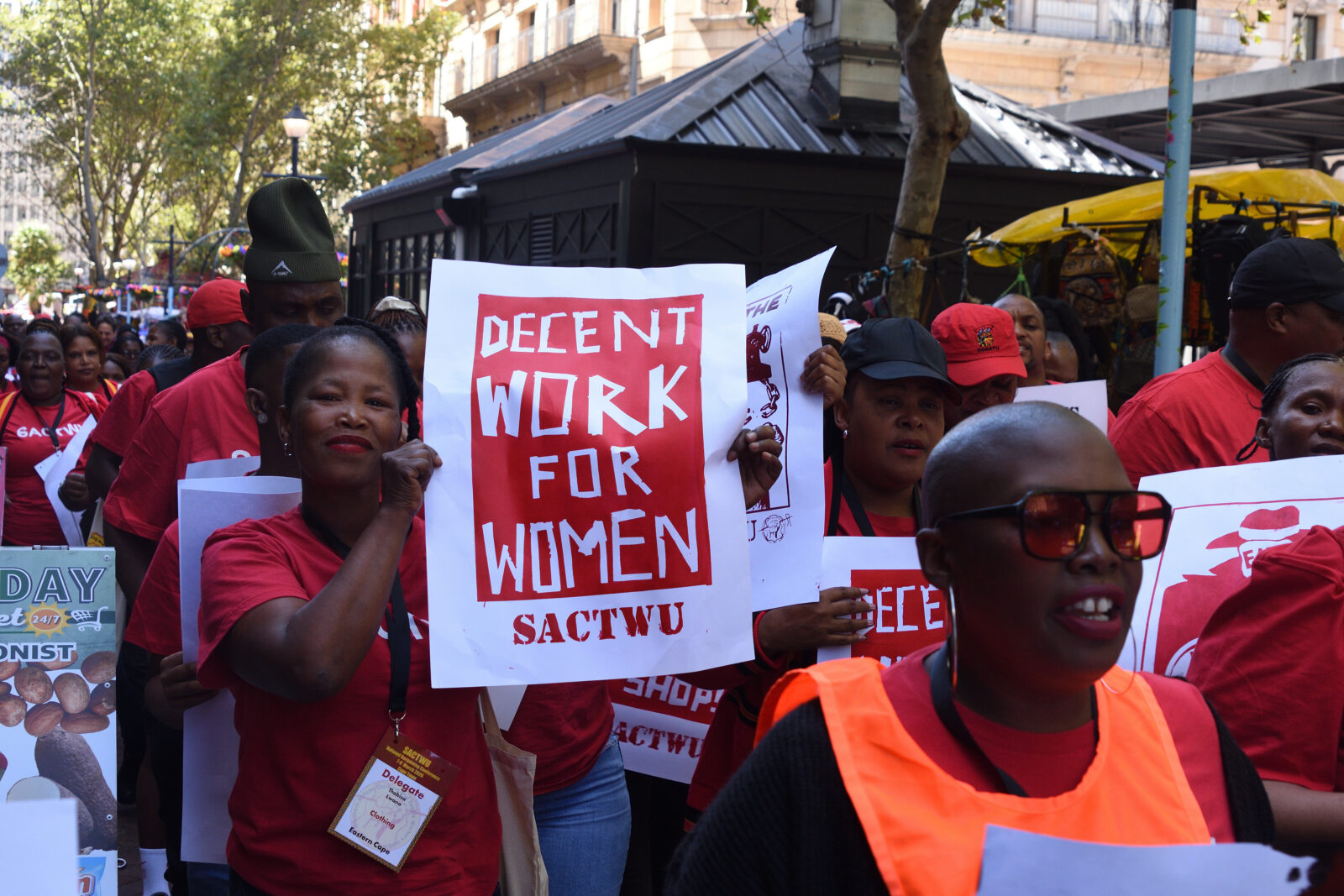
SACTWU workers marching in Cape Town with Break the Chains in our Supply Chains placard, March 2026
SACTWU delegates march through Cape Town calling for an end to supply chain exploitation, during the union’s national bargaining conference, March 2026.

Delegates condemned appalling conditions in sweatshops in Newcastle, KwaZulu-Natal. A joint inspection blitz led by the Department of Employment and Labour, overseen by the Parliamentary Portfolio Committee on Employment and Labour, uncovered widespread labour and immigration violations in the Amajuba district on 5 February 2026.

The operation exposed extreme exploitation, unsafe workplaces and slave-like practices in factories supplying major South African retailers including Mr Price, Pick’n Pay, Ackermans, Pepkor and JET, all violating labour laws and safety standards. Most workers in the factories are undocumented, SACTWU general secretary Bonita Loubser confirmed. The union is taking legal action through the courts and bargaining councils to enforce compliance with national labour laws.

Inspectors found undocumented foreign nationals living on the premises of clothing and textile factories in conditions described as unhygienic and at serious risk of fire. Video footage recorded during the raids showed hundreds of boxes of clothing bearing labels of well-known South African retail brands.

“The Newcastle horror shows what happens when the rule of law collapses,” SACTWU said in its conference declaration. Weak policing, sparse inspections, lax immigration controls and broken health, safety and justice systems have allowed profit-driven employers to exploit workers unchecked.

Conference delegates took the fight outside, picketing retail shops to “break the chains” of worker exploitation in national supply chains.

Fighting for living wages

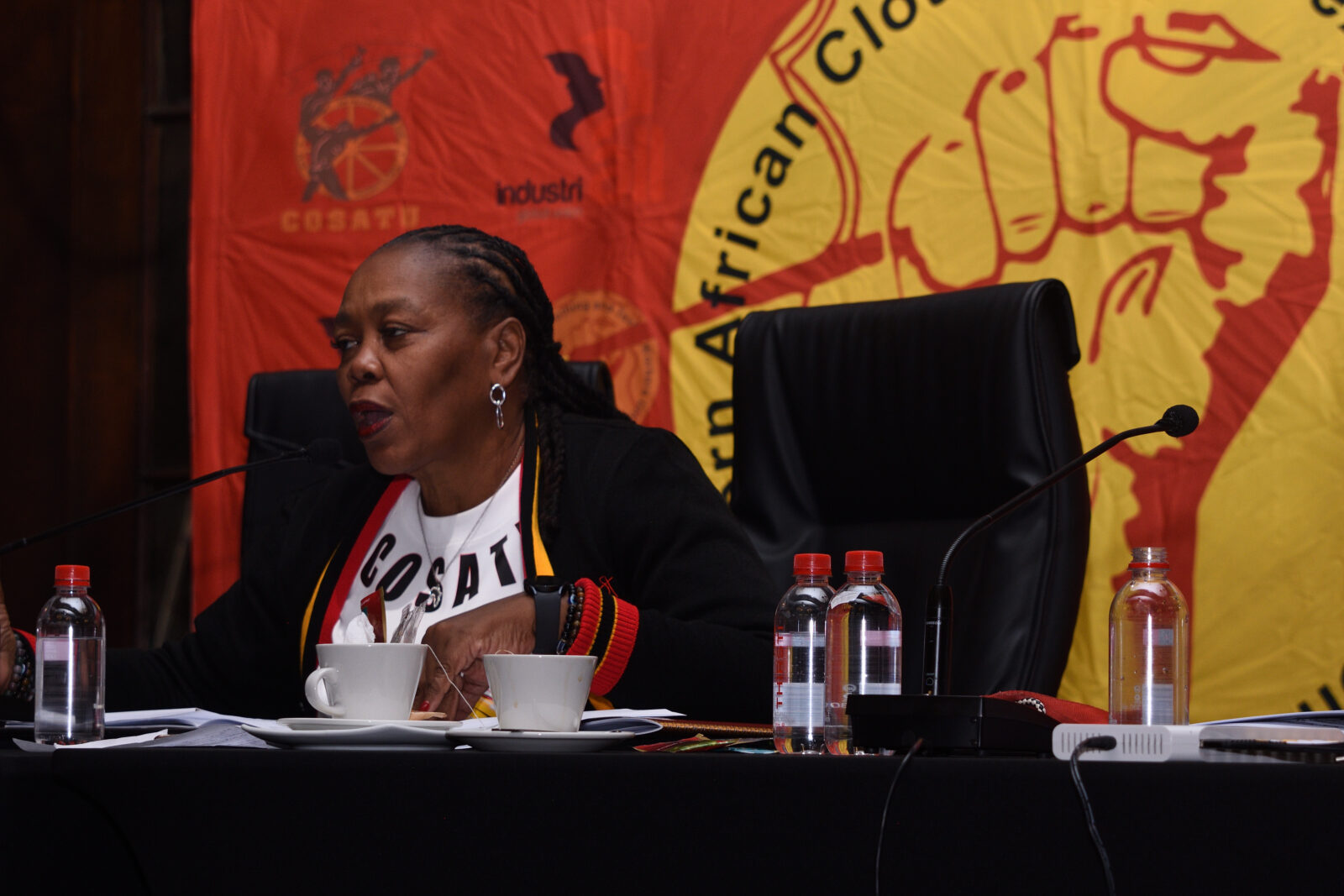
COSATU president Susan Khumalo speaking at SACTWU conference with COSATU and SACTWU banners behind her, Cape Town, March 2026
COSATU president Susan Khumalo addresses delegates at the SACTWU national bargaining conference in Cape Town, 7–9 March 2026.

The next round of negotiations will cover annual and family-responsibility leave, working hours, job grading, healthcare, retirement benefits and job security.

The union also seeks organizational rights, wage guarantees and expanded bargaining units, with delegates stressing that demands must remain sector-specific to reflect the realities of each industry.

Bonita Loubser, SACTWU general secretary, called the conference vital.

“The conference consolidates living-wage mandates from workplaces, strengthens shop stewards, sharpens strategy and prepares for negotiations,” she said.

Susan Khumalo, SACTWU president and IndustriALL’s Sub-Saharan Africa regional co-chair, added:

“Collective bargaining changes lives through living wages, better conditions, stable industrial relations and protection of the right to organize.”

Unions transform society

Congress of South African Trade Unions (COSATU) president Zingiswa Losi addressed delegates, telling them:

“Trade unions organize workers, defend rights and transform society.”

With many young shop stewards attending for the first time, Losi emphasized that recruiting young workers is a way to secure union power. SACTWU is affiliated to COSATU.

“Our membership growth campaign is crucial because membership is the heart of the union. Without sufficient and large membership, there is no strong union power. Our collective bargaining season provides us with a fantastic opportunity to further grow our union membership,”

said Michael Shabalala, SACTWU 2nd national organizing secretary.

On job protection, the conference stressed the need for campaigns to secure decent jobs under the African Continental Free Trade Area and other trade agreements.

Delegates also called for implementation of the Retail-Clothing Footwear Textile Leather masterplan and stronger safeguards against cheap imports.

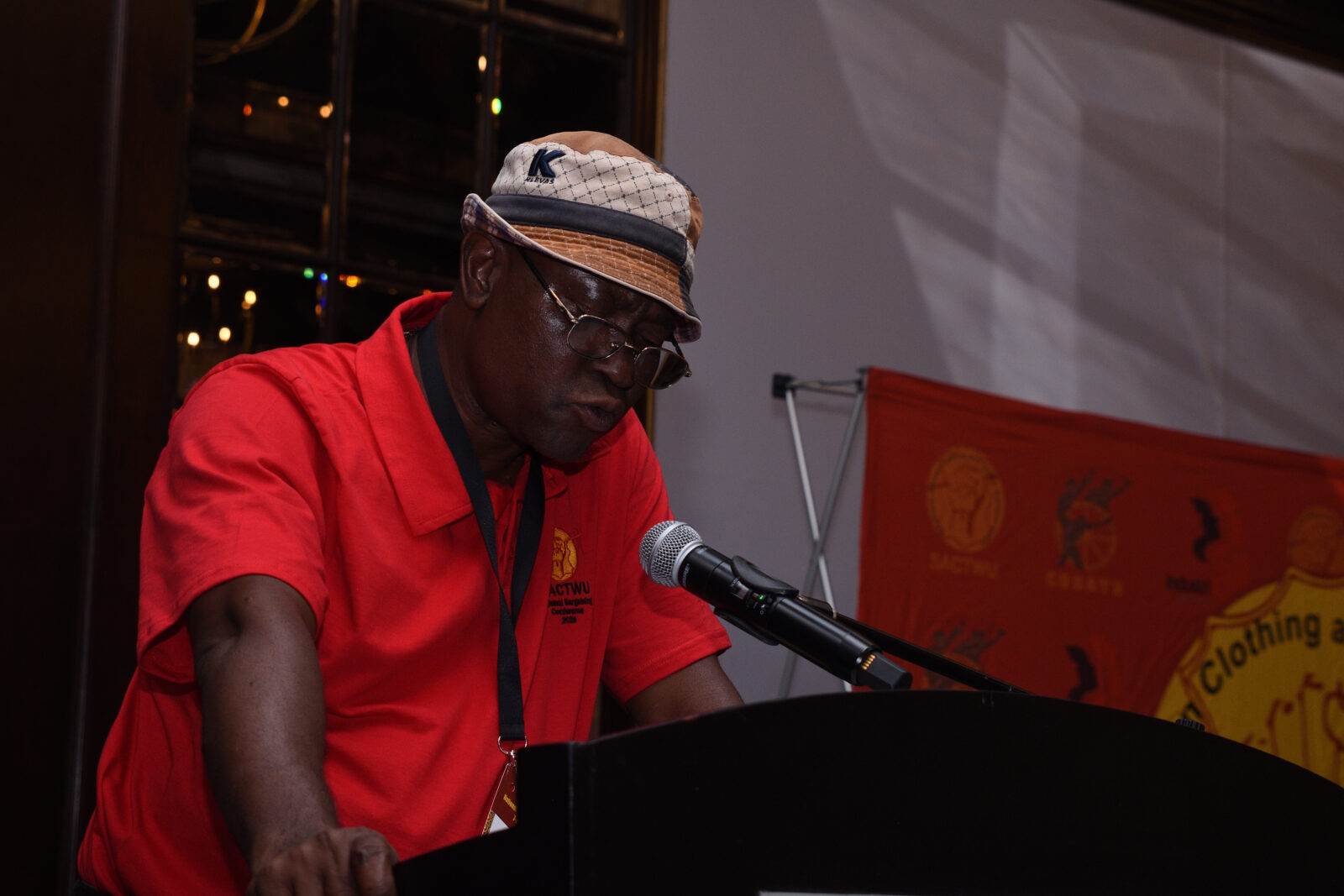
Michael Shabalala, SACTWU 2nd national organising secretary, at the podium with SACTWU banner behind him, Cape Town, March 2026
Michael Shabalala, SACTWU 2nd national organising secretary, at the podium during the union’s national bargaining conference in Cape Town, 7–9 March 2026.