Yaoundé’s thin harvest: WTO ministers meeting delivers little gains for Africa

WTO reform, e-commerce, fisheries subsidies, agriculture, and the least-developed countries package was deferred back to Geneva, Switzerland, for further work.

The outcome disappointed trade unions and civil society organizations, who had their own parallel meetings, and hoped that the meeting would deliver real progress on long-standing development concerns. Instead, it exposed sharp differences over policy space for developing countries, the future of digital trade, and the balance between multilateral interests and national sovereignty.

Deadlock over digital duties

The most visible stalemate concerned the long-standing moratorium on customs duties on electronic transmissions. The moratorium, in place since 1998, prevents members from taxing cross-border digital products such as software, music or e-books. Traditionally renewed every two years, the moratorium lapsed after ministers, who are the WTO’s highest decision-making body, failed to agree on an extension.

The United States initially pushed for a permanent ban, later offering a five-year renewal. Brazil insisted on sticking to the two-year norm, arguing that a longer freeze would limit developing countries’ ability to generate revenue and shape digital policy. The related moratorium on non-violation and situation complaints under the Trade-Related Aspects of Intellectual Property Rights (TRIPS) agreement also expired without renewal.

Trade unions including ITUC, IndustriALL Global Union, Public Services International, and African civil society organisations including the Africa Trade Network, viewed the failure as a reflection of deeper imbalances in the WTO frameworks. Most argued that a permanent or extended moratorium would disproportionately benefit large digital exporters while limiting options in economies still building their digital infrastructure.

Missed opportunity for agriculture

Agriculture, a priority for African and other developing members, again yielded no concrete advances. No decisions were reached on domestic support, market access, public food security or the special safeguard mechanism. The long-standing demands of the Cotton-4 countries (Benin, Burkina Faso, Chad, and Mali) on subsidies also went unaddressed. The United States had blocked progress on agriculture earlier in the conference, calling for a fundamental reset of the negotiations.

Another flashpoint was on the proposed incorporation of the Investment Facilitation for Development Agreement into the WTO rulebook. Trade unions and civil society warned that formal adoption risked undermining the consensus-based nature of the organisation.

Trade union and civil society representatives pointed to the African Continental Free Trade Area Investment Protocol as a more suitable regional framework, arguing that it avoids adversarial international arbitration and better protects domestic investors.

Paule-France Ndessomin, IndustriALL regional secretary for Sub Saharan Africa said the meeting is a missed opportunity to expand industrial policy space for decent job creation, particularly for Africa’s youthful population in line with the Marrakech Agreement which established the WTO.

“Fairer and more equitable trade rules that create jobs and prioritize African workers and communities are needed as pathways going forward,”

she said.
Strengthening union organizing efforts in Nigeria’s manufacturing industries

Discussions during the mission, 9-11 March, focused on persistent violations of freedom of association and collective bargaining rights, particularly at Chinese-owned firms. This happened alongside widespread decent-work deficits, precarious working conditions, the erosion of living wages and legal obstacles to union recognition most notably at Dangote Industries. Delegates and affiliates also examined challenges in defending workers’ rights along supply chains and strategies to increase union density.

The mission coincided with an International Women’s Day event in Lagos hosted by the National Union of Textile, Garment and Tailoring Workers (NUTGTW) on 11 March under the theme: Rights. Justice. Action. For all women and girls.”

Policy responses for economic development

The IndustriALL mission heard that Nigeria’s manufacturing revival faces formidable structural challenges. Chronic energy shortages, rooted in ageing infrastructure and recurrent national-grid collapses, continue to throttle industrial output. Early this year, about 16 power plants were offline at once, leaving generation at about 4,000 MW despite far higher installed capacity. 

The cost-of-living crisis has further eroded real incomes. The national minimum wage of ₦70,000 (US$51) per month, introduced in 2024, has been rapidly overtaken by persistent inflation, prompting the Nigeria Labour Congress to demand an urgent review in 2026. Youth unemployment remains high, compounding social pressures in a country where the informal economy still dominates.

However, policy initiatives supported by unions offer pathways forward. For example, the government’s National Cotton, Textile and Garment (CTG) policy seeks to revive a once-vibrant value chain from farm to factory through targeted financing via the Bank of Industry. The establishment of a dedicated development board aims to curb billions of dollars in annual garment imports and generate much-needed jobs. Broader industrialisation efforts emphasise the untapped potential of Nigeria’s oil and gas reserves, particularly through the Decade of Gas programme, to power domestic manufacturing and position the country as a regional energy hub.

Regional and international trade agreements could amplify these gains. The African Continental Free Trade Area (AfCFTA) promises expanded market access and the development of cross-border value chains. Further, the African Growth and Opportunity Act (AGOA), recently renewed for one year, provides tariff-free entry into the US market for eligible goods.

The unions said the levels of unionization in Nigerian manufacturing remain modest, reflecting both legal and practical barriers to organising.

“There are great opportunities to deepen organizing across most manufacturing sectors in Nigeria. For this to materialise, respect for trade-union rights and genuine collective bargaining is essential,”

said IndustriALL assistant general secretary, Kemal Özkan.

The delegation included Rose Omamo, IndustriALL vice president, and Paule-France Ndessomin, the regional secretary for sub-Saharan Africa.

IndustriALL’s Nigerian affiliates are the Chemical and Non-Metallic Products Senior Staff Association (CANMPSSAN), the National Union of Petroleum and Natural Gas Workers (NUPENG), the National Union of Textile, Garment and Tailoring Workers (NUTGTW), the Petroleum and Natural Gas Senior Staff Association (PENGASSAN), the National Union of Chemical, Footwear, Rubber, Leather and Non-Metallic Products Employees (NUCFLNANMPE), the Steel and Engineering Workers Union of Nigeria (SEWUN), the National Union of Electricity Employees (NUEE) and Dangote.

Unions voice concerns over Anglo American restructuring

After fending off BHP’s hostile bid worth over US$40 billion in 2024, Anglo American chose to streamline. It shed nickel and steelmaking coal assets. The demerger of its platinum business into Valterra Platinum wrapped up in May 2025.

Talks drag on for the sale of De Beers, eyed for completion in 2026. Meanwhile, Anglo American merged with Canada’s Teck Resources to create Anglo Teck, a major copper player.

Workers at Valterra Platinum in South Africa and Zimbabwe, and at De Beers in Botswana and Namibia, demand firm protections. These cover freedom of association, collective bargaining and maternity rights. They insist on a just transition that honours their benefits and interests.

The demands emerged under the existing memorandum of understanding between IndustriALL and Anglo American. The MoU covers dialogue on health and safety, ending gender-based violence and harassment, sustainable mining which includes environmental, social, and governance issues. 

The global dialogue tackles new technologies, training, retraining, a Just Transition for coal workers and compliance with the Initiative for Responsible Mining Assurance (IRMA).

Key worries surfaced. IRMA audits flagged respiratory risks and exposure issues at Sishen in South Africa. Unions pointed to ageing equipment at Kumba Iron Ore’s Kolomela mine. At Unki mine in Zimbabwe, power cuts weaken ventilation without backups, raising accident risks.

Workers are anxious

Anxiety runs high during disposals. Workers at De Beers in Botswana and South Africa feel lost. Voluntary retrenchment packages for over 1,000 in Botswana triggered panic — refusing might mean no job. “Workers at Joaneng and Orapa feel like lost sheep in the bush,” said Fenellah Thebe from Debswana.

Stephen Smyth, general vice president of Australia’s Mining and Energy Union, highlighted success in Australia. Unions and Anglo American jointly embraced global health standards, hazard identification and risk management on the continent.

Kemal Özkan, IndustriALL assistant general secretary, stressed full MoU adherence. The MoU upholds global dialogue, collective bargaining and union voice. Anglo American’s policies and culture must address legacy issues in transitions, he said, especially for workers in critical raw materials as well as maintaining industrial harmony. 

He emphasized that

“the current global dialogue is essential for aligning IndustriALL’s strategies with corporate changes, ensuring that demergers do not erode hard-won gains in labour rights, fair transition frameworks, and inclusive industrial policies across Southern Africa.” 

He further explained that it is the expectation that Anglo’s description on searching for like-minded takeover for diamond operations reflects the standards and values of the company in terms of their operation as well maintaining Industrial harmony and cooperation with its stakeholders. 

The meeting covered demerged entities like Valterra Platinum and Unki. Concerns include contractor labour-broking at Unki evading collective agreements, casualisation blocking benefits, rising silicosis claims at Mogalakwena, and for embracing of human rights due diligence by sub-contractors.

Gender mainstreaming and addressing gender-based violence and harassment

On gender, Anglo American reported 38 per cent women in top management and progress via its Living with Dignity hub — reporting of GBVH jumped to 75 from 10-20 per cent. Unions called for harmonising company policies with collective bargaining and ending bullying and harassment.

IRMA findings at Sishen and Kolomela revealed gaps: inconsistent risk assessments, training gaps, weak respiratory programmes, and worker reluctance to refuse unsafe work.

Delegates urged Anglo American to ensure “like-minded” buyers uphold standards. They pushed for extended dialogue covering Anglo Teck and future partners not yet under the MoU.

Unions stay cautiously optimistic. Anglo Teck’s copper projects in Chile and Peru, alongside iron-ore expansion in Brazil, should create more jobs than they cut.

Collective bargaining changes lives for South African workers

“We are workers by day, family members at home and community members by night,”

one delegate told the conference. The remark underscored the many roles workers juggle and why collective bargaining matters beyond the factory floor.

SACTWU, an IndustriALL Global Union affiliate, held the event from 7 to 9 March under the theme: unity, jobs, growth and service to members.

The union has more than 100,000 members across sectors including clothing, footwear, tanning, laundry, farming and agro-processing and was formed in 1989.

Newcastle: when the rule of law collapses

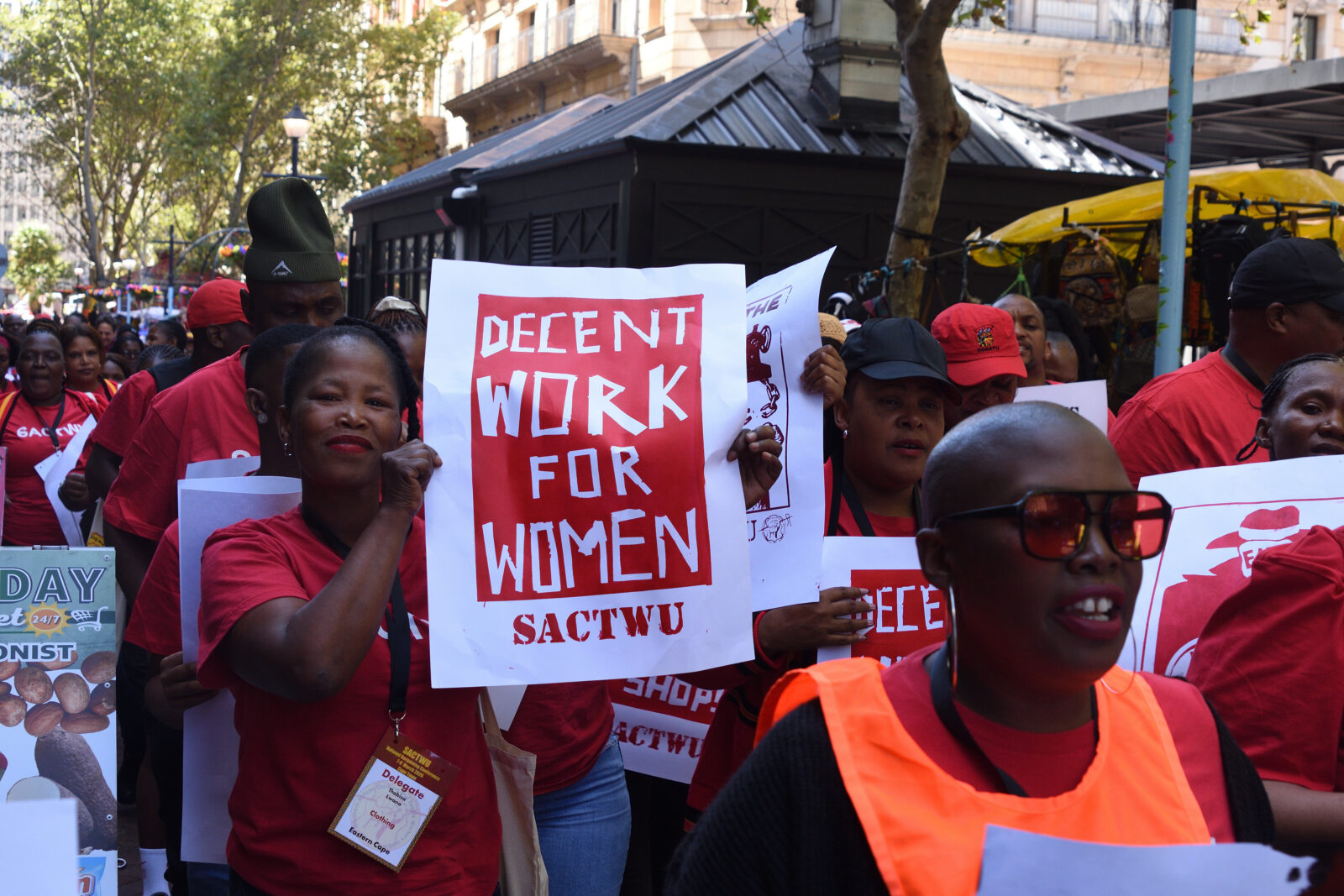
SACTWU workers marching in Cape Town with Break the Chains in our Supply Chains placard, March 2026
SACTWU delegates march through Cape Town calling for an end to supply chain exploitation, during the union’s national bargaining conference, March 2026.

Delegates condemned appalling conditions in sweatshops in Newcastle, KwaZulu-Natal. A joint inspection blitz led by the Department of Employment and Labour, overseen by the Parliamentary Portfolio Committee on Employment and Labour, uncovered widespread labour and immigration violations in the Amajuba district on 5 February 2026.

The operation exposed extreme exploitation, unsafe workplaces and slave-like practices in factories supplying major South African retailers including Mr Price, Pick’n Pay, Ackermans, Pepkor and JET, all violating labour laws and safety standards. Most workers in the factories are undocumented, SACTWU general secretary Bonita Loubser confirmed. The union is taking legal action through the courts and bargaining councils to enforce compliance with national labour laws.

Inspectors found undocumented foreign nationals living on the premises of clothing and textile factories in conditions described as unhygienic and at serious risk of fire. Video footage recorded during the raids showed hundreds of boxes of clothing bearing labels of well-known South African retail brands.

“The Newcastle horror shows what happens when the rule of law collapses,” SACTWU said in its conference declaration. Weak policing, sparse inspections, lax immigration controls and broken health, safety and justice systems have allowed profit-driven employers to exploit workers unchecked.

Conference delegates took the fight outside, picketing retail shops to “break the chains” of worker exploitation in national supply chains.

Fighting for living wages

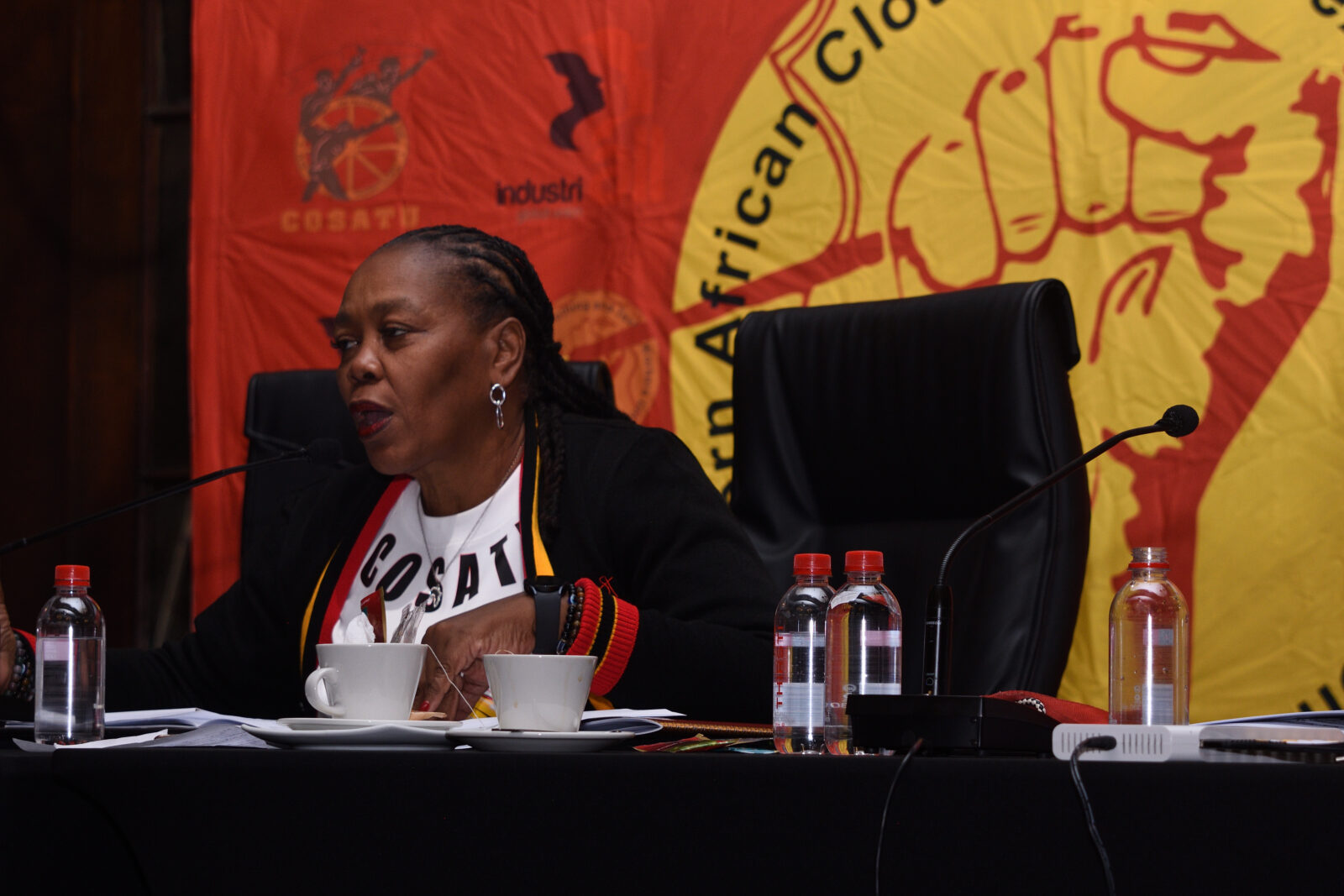
COSATU president Susan Khumalo speaking at SACTWU conference with COSATU and SACTWU banners behind her, Cape Town, March 2026
COSATU president Susan Khumalo addresses delegates at the SACTWU national bargaining conference in Cape Town, 7–9 March 2026.

The next round of negotiations will cover annual and family-responsibility leave, working hours, job grading, healthcare, retirement benefits and job security.

The union also seeks organizational rights, wage guarantees and expanded bargaining units, with delegates stressing that demands must remain sector-specific to reflect the realities of each industry.

Bonita Loubser, SACTWU general secretary, called the conference vital.

“The conference consolidates living-wage mandates from workplaces, strengthens shop stewards, sharpens strategy and prepares for negotiations,” she said.

Susan Khumalo, SACTWU president and IndustriALL’s Sub-Saharan Africa regional co-chair, added:

“Collective bargaining changes lives through living wages, better conditions, stable industrial relations and protection of the right to organize.”

Unions transform society

Congress of South African Trade Unions (COSATU) president Zingiswa Losi addressed delegates, telling them:

“Trade unions organize workers, defend rights and transform society.”

With many young shop stewards attending for the first time, Losi emphasized that recruiting young workers is a way to secure union power. SACTWU is affiliated to COSATU.

“Our membership growth campaign is crucial because membership is the heart of the union. Without sufficient and large membership, there is no strong union power. Our collective bargaining season provides us with a fantastic opportunity to further grow our union membership,”

said Michael Shabalala, SACTWU 2nd national organizing secretary.

On job protection, the conference stressed the need for campaigns to secure decent jobs under the African Continental Free Trade Area and other trade agreements.

Delegates also called for implementation of the Retail-Clothing Footwear Textile Leather masterplan and stronger safeguards against cheap imports.

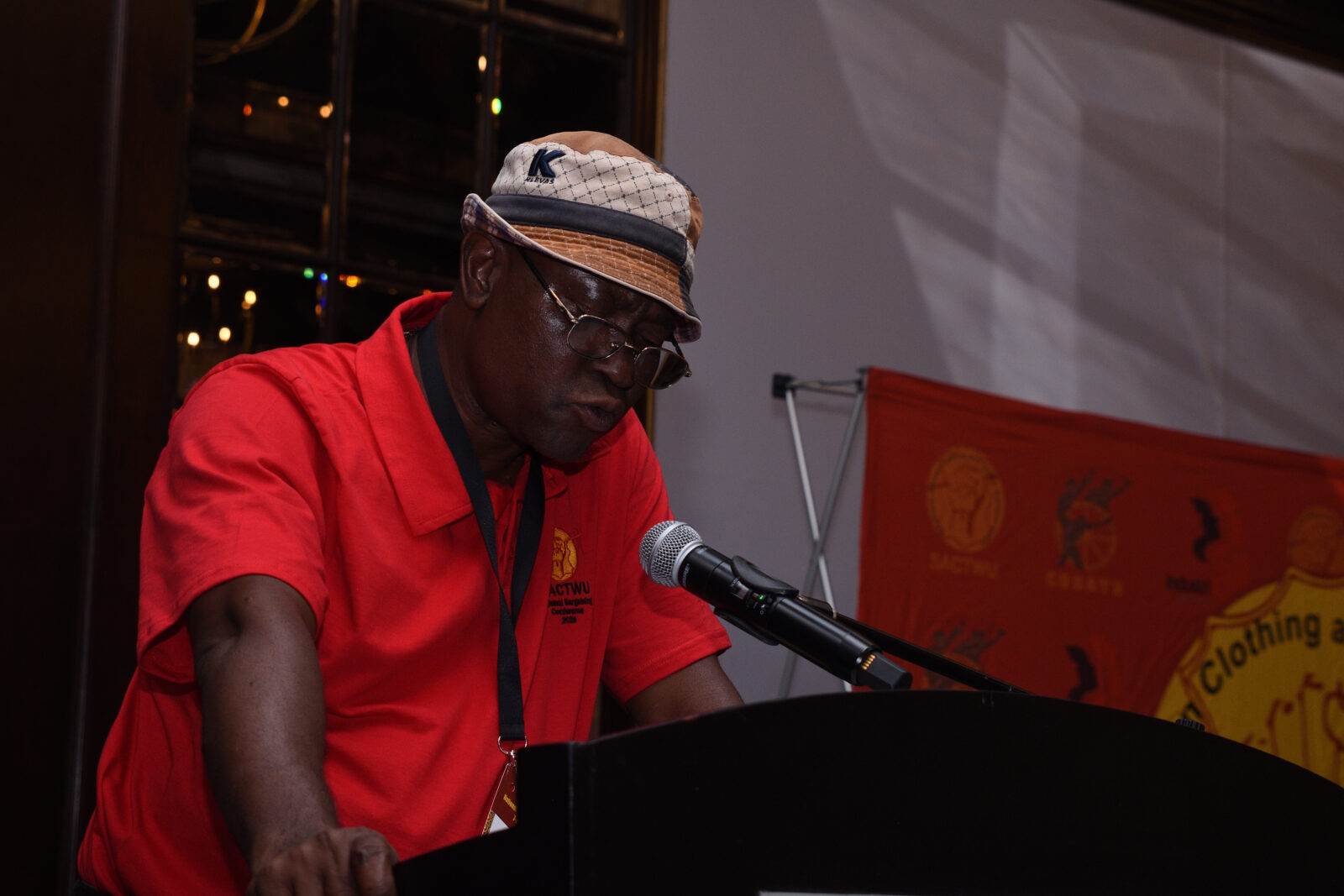
Michael Shabalala, SACTWU 2nd national organising secretary, at the podium with SACTWU banner behind him, Cape Town, March 2026
Michael Shabalala, SACTWU 2nd national organising secretary, at the podium during the union’s national bargaining conference in Cape Town, 7–9 March 2026.

US tariffs trigger gendered supply chain shock on Lesotho garment industries

For women workers, the fallout is particularly acute, as retrenched workers queue daily at factory gates from 7 am hoping for sporadic shifts while some turn to informal jobs like laundry or street vending. Job losses have plunged households into distress, with some workers struggling to pay for food, school fees, housing, or basics thus worsening food insecurity and reliance on subsistence farming or remittances. Unions describe a gendered supply chain shock, as women face limited alternatives in a patriarchal economy with scarce formal jobs.

Once thriving under the duty-free access provided by the African Growth and Opportunity Act (AGOA), Lesotho’s garment industry exported jeans, casual wear and garments for major brands like Levi’s, Gap, Walmart, Reebok and others to the US- its main market. Annual exports to the US reached over US$230 million, representing above 45 per cent of the sector’s output and contributing around 20 per cent of Lesotho’s GDP. The industry employed 50,000 workers at peak, with 80–95 per cent women, mostly breadwinners. According to unions, the workers wages were important to a nation plagued by widespread poverty and high unemployment of over 30 per cent with youth unemployment even higher.

The tariffs initially set at 50 per cent, the highest globally at the time, caused immediate chaos. Even after negotiations reduced the rate to 15 per cent which was still higher than the 10 per cent faced by other textile producing countries like Kenya, Eswatini and Ethiopia, buyer uncertainty, order cancellations and hesitation over AGOA’s future led to widespread disruptions. AGOA expired in September and was extended by only a year to 2026. This heightened fears of permanent loss of AGOA benefits. 

Factories have closed, scaled back, or shifted operations to elsewhere. The wave of closures has left Lesotho garment workers with little recourse and no safety net. For example, Ever Unison Garments, which once peaked at over 2,000 workers, shut down temporarily and reopened with just 200 workers while expanding production in lower-tariff Kenya and Eswatini. Tai Yuan Garments closed, affecting 1,500 workers. TZICC Clothing Manufacturers closed with 700 jobs lost. Precious Garments, employing about 4,000 workers and producing for brands like Reebok, Mayor and Fish, has laid off all workers amid buyer reluctance over the short-term AGOA renewal.

Other factories report heavy cuts: Quantum Apparel retrenched over 50 per cent of its workforce. Hippo Knitting which produces for Fabletics dropped from 1,200 to 400 workers. Maseru E-Textiles which manufactures for Perry Ellis placed its 1,000 workers on indefinite leave after retrenching about 200 others.

IndustriALL Global Union affiliate, the Independent Democratic Union of Lesotho (IDUL), warns that over tens of thousands of jobs are at risk potentially up to 40,000 if conditions persist in export-oriented operations. IDUL says many workers face reduced hours, partial wages some as low as one-third normal pay, no work, no pay policies and unpaid leave.

IndustriALL Sub Saharan Africa regional secretary, Paule-France Ndessomin, said: 

“As the effects of punitive tariffs on women-headed households in Lesotho take their toll, this underscores how US policy decisions can devastate jobs and distant livelihoods in the Global South, and why trade should be fair for developing countries. Without urgent intervention, Lesotho garment workers risk permanent exclusion from the formal economy.”

Deadly mud rush traps miners 800 metres underground

Mud rush traps miners

A mud rush in the early hours of 17 February sent an influx of mud and water surging through sections of the shaft, trapping miners at depths of more than 800 metres. On 20 February, minister of mineral and petroleum resources, Gwede Mantashe, visited the site and said the miners must be presumed deceased due to their prolonged exposure to extreme conditions.

Union expresses sympathy

Mosepedi Sanane, National Union of Mineworkers (NUM) Kimberley regional secretary, expressed sympathy:

“Our thoughts and prayers are with the families and colleagues of the affected workers at this profoundly challenging time. We continue to hold onto the faint hope that they may yet be located alive and returned safely.”

Call for independent investigation

Whilst prioritizing rescue efforts, the NUM has urged the department of mineral resources and energy (DMRE) to initiate a thorough and independent investigation. The union insists on a transparent process to determine the causes of the disaster and whether any lapses in safety management systems or operational protocols contributed to the disaster. The National Union of Metalworkers of South Africa (NUMSA) echoed similar concerns, stressing that rescue efforts should continue.

Mining’s ongoing dangers

UASA-The Union, in its statement, underscored the persistent hazards inherent in mining, emphasising that the government, mining stakeholders, social partners and employers must increase efforts towards achieving “Zero Harm”.

“Notwithstanding existing safety protocols, mining continues to represent one of the most hazardous occupations, with workers’ lives repeatedly placed at risk. Every fatality or serious injury imposes severe economic hardship on dependent families, eroding household financial security and long-term livelihoods,”

states UASA.

Stronger safety measures urged

Additionally, the unions say the mud rush underscored the need for rigorous risk assessment, enhanced geotechnical monitoring, and strict enforcement of regulatory standards to mitigate workers’ health and safety risks.

Glen Mpufane, IndustriALL director for mining, said:

“This tragedy highlights ongoing structural challenges in South African mining safety, particularly in smaller diamond operations, where geological risks such as mud rushes worsened by groundwater or rainwater can lead to rapid and devastating flooding. This calls for regular inspections and adherence to mine health and safety protocols.”

Empowering African trade unions, enforcing rights with human rights due diligence

In Sub-Saharan Africa, the imperative for HRDD is especially acute given the region’s outsized role in supplying minerals critical to the energy transition, electronics and renewable energy industries. The continent holds major reserves of cobalt, copper, lithium, manganese and nickel whose demand has surged amid decarbonisation efforts worldwide. Yet extraction remains beset by entrenched human-rights risks: forced community displacements, violations of workers and human rights, environmental degradation, adverse health effects on local populations and in some instances, ties to conflict financing or organized crime.

HRDD draws its foundation from the United Nations Guiding Principles on Business and Human Rights (UNGPs), endorsed in 2011, which impose on companies a responsibility to respect human rights via ongoing processes of identification, prevention, mitigation and remediation of adverse impacts. Sector-specific guidance, notably the OECD’s Due Diligence Guidance for Responsible Supply Chains of Minerals from Conflict-Affected and High-Risk Areas, has proved influential for tin, tantalum, tungsten and gold in conflict zones such as Eastern Democratic Republic of Congo (DRC).

The mining landscape in Sub-Saharan Africa presents a mixed picture. Large-scale operations often controlled by multinationals from China, Europe, Canada and elsewhere face persistent criticism over inadequate community consultation, water and soil pollution, hazardous working conditions, poverty-level wages, gender-based violence and harassment, and suppression of union activity, including breaches of freedom of association and collective bargaining. Artisanal and small-scale mining (ASM), prevalent in countries such as the DRC, Ghana, Tanzania and Zimbabwe, worsens these vulnerabilities with child labour, toxic mercury exposure and exploitation by criminal networks.

Data from the Business and Human Rights Resource Centre’s Transition Minerals Tracker underscore the scale of the problem. For example, between 2010 and 2024, it recorded 178 human-rights and environmental abuses linked to transition minerals in Africa which is more than 20 per cent of the global total of 835 cases. The DRC alone accounted for over half of Africa’s allegations, mostly at cobalt and copper sites.

Unions, including IndustriALL Global Union affiliates in the DRC, Zambia and Zimbabwe, are pressing hard for rigorous HRDD implementation. Their advocacy emphasises scrutiny of corporate disclosures, risk mapping and the adoption of national action plans on business and human rights still absent in most African countries. They call for binding rules to secure fair-trade terms, greater local beneficiation, living wages and environmental stewardship.

Recent regulatory shifts are reshaping HRDD. The European Union’s Corporate Sustainability Due Diligence Directive (CSDDD), now in force, mandates HRDD for large companies operating in or exporting to the EU, including human-rights and environmental impacts throughout value chains. This compels mining firms and their Sub-Saharan suppliers to strengthen processes, undertake audits and offer remediation or face exclusion from the European market. Complementary EU measures on batteries, deforestation and conflict minerals add further layers of scrutiny to African-sourced minerals.

However, challenges remain formidable: weak governance, corruption, limited enforcement capacity and opaque supply chains all impede effective due diligence. In high-risk settings such as conflict zones or informal gold sectors in Zimbabwe, HRDD frequently falls short of eradicating harms.

At the roundtable, Kelly Fay Rodriguez of the CCHRDD announced the launch of a dedicated project in the DRC, Zambia and Zimbabwe to support mine workers in critical minerals value chains. The initiative aims to ensure that emerging international due-diligence laws and trade policies deliver gains for labour rights, with particular focus on freedom of association and collective bargaining.

Established in 2025 by UNI Global Union, IndustriALL Global Union, the Friedrich Ebert Foundation and Germany’s DGB trade-union confederation, the CCHRDD exists to harness HRDD frameworks in ways that reinforce workers’ rights especially the enabling rights of union organization and bargaining across global value chains.

The meeting closed on a note of cautious optimism: HRDD offers mining companies a tool for risk mitigation while presenting unions and host societies with leverage for more inclusive development.

As Glen Mpufane, IndustriALL’s mining director, put it:

“Effective implementation of HRDD supported by stronger national frameworks, active union engagement, and international accountability is essential if mineral wealth is to translate into genuine economic progress rather than perpetuating patterns of extraction without equitable returns.”

Beyond the mining deals

This year, 9 to 12 February, the two events ran in parallel at separate venues in the city. The mainstream Indaba, investor-focused and corporate-oriented, drew the usual crowd of executives pursuing partnerships and capital flows in critical minerals. By contrast, the Alternative Mining Indaba, under the theme Alternative Stories of Mining, amplified the perspectives of marginalised and Indigenous communities, trade unions, and civil-society groups insistent on mining practices that reduce poverty, narrow inequality, and foster sustainable livelihoods rather than merely extract value.

The persistent contrast of wealth generated by mines put next to persistent poverty in host communities featured prominently in discussions, as did the risk of creating so-called green sacrifice zones where the costs of the global energy transition fall disproportionately on vulnerable populations in mineral-rich regions.

Trade unions, including affiliates of IndustriALL Global Union from Australia, Namibia, South Africa and Zimbabwe, engaged actively at both forums. They pressed mining companies on workers’ rights, decent working standards, sustainable extraction, and the need for a Just Transition. During a meeting on 11 February, emphasis fell on the Initiative for Responsible Mining Assurance (IRMA) as one of the more credible mechanisms for safeguarding labour rights, community interests, and environmental protections. At the Alternative Mining Indaba, unions stressed that workers form an integral part of affected communities and are therefore equally exposed to environmental, social, and governance failures.

Critical transition minerals including cobalt, lithium, graphite, and others essential to batteries and renewable energy dominated agendas at both gatherings. Sessions explored how to harness these resources for broader economic benefit, the resurgence of resource nationalism, the scope for equitable global supply-chain partnerships, human-capital development, geopolitical dynamics, regulatory frameworks, and the role of governments. Chinese multinational corporations came under scrutiny for their close ties to host governments and workers’ rights violations in countries such as Zambia and Zimbabwe.

In a panel on corporate accountability at the AMI, IndustriALL outlined its strategy of engaging major players including Anglo American, Glencore and Rio Tinto through global company networks, structured dialogue, and collective bargaining. IndustriALL affiliates are also forging alliances with artisanal and small-scale mining associations and local communities in the DRC, Zambia and Zimbabwe, with initial cooperation centred on health and safety improvements.

As Glen Mpufane, IndustriALL director for mining observed:

“The dialogue and engagement at both the Mining Indaba and the Alternative Mining Indaba is taking place in contested spaces. However, trade unions should continue to exploit these platforms to advance the Just Transition and defend workers’ interests, particularly as global demand for transition minerals intensifies.”

MUZ wins wage deal from Lumwana, demands more for Zambian communities

The Mine Workers’ Union of Zambia (MUZ), an IndustriALL Global Union affiliate, has secured a victory in its latest round of collective bargaining with Lumwana Copper Mines, a key subsidiary of Barrick Gold Corporation. The parties finalized an agreement in Lusaka granting unionized workers a 13 per cent wage increase, effective for the year.
 
Speaking at the signing ceremony on 31 January, George Mumba, MUZ general secretary, pressed the company to go beyond wage adjustments. He advocated for the implementation of living wages to levels sufficient to support a decent standard of living for workers and their families alongside firmer commitments to environmental, social and governance (ESG) initiatives that deliver tangible benefits to mining affected communities.
 

“This agreement reflects the strength of collective bargaining and the unity of our members. We need robust provisions for occupational health and safety, comprehensive social protection, greater job security and wages that reflect the true cost of living.”

Mumba emphasized. MUZ has over 1,100 members at Lumwana. Further, he argued that sustainable mining practices, which prioritise community welfare and environmental stewardship, are essential if the industry is to contribute meaningfully to national development in Zambia rather than only extracting resources for export.
 
The agreement arrives at a pivotal moment for Lumwana. Barrick Gold has committed to a substantial capital outlay of US$2 billion to fund the Super Pit Expansion Project, a major initiative designed to transform the operation into a Tier One copper mine. This ambitious programme, already under way, aims to double annual copper output to approximately 240,000 tonnes through the construction of a significantly enlarged processing plant with a capacity of 50 million tonnes per annum. Such investments are being boosted by favourable global copper demand which is driven by the energy transition and electrification trends.
 
However, the wage deal also highlights broader challenges facing workers on the Zambian copper belt. While the 13 per cent rise represents a meaningful gain for workers translating, in some cases, to increases of between K1,100 ($56) for lower-paid workers and K2,500 ($127) for higher earners it occurs against a backdrop of inflationary pressures and rising living costs that have eroded purchasing power across the economy.
 
Glen Mpufane, IndustriALL director for mining, said:

“In a mining industry where commodity price volatility and geopolitical uncertainties loom large, Zambia’s copper sector must pay living wages. Sustainable mining depends not only on production volumes and capital inflows, but also on fostering industrial relations that support job security and community development.”

Image: Shutterstock 

Chinese-owned Zimbabwe mine dismisses women after forced HIV tests

At Xiao Honguqiu’s Famona gold mine, three women workers were compelled to undergo HIV tests and subsequently dismissed on 22 December 2025, regardless of the results, while more than 60 male colleagues faced no such requirement. The Zimbabwe Diamond and Allied Minerals Workers Union (ZDAMWU), an IndustriALL Global Union affiliate, condemned the practice as a form of sexual harassment and gender-based discrimination.
 
Zimbabwe’s Constitution and labour legislation safeguard workers’ dignity, equality before the law and protection from gender discrimination. The right to privacy, including the confidentiality of health information such as HIV status, is similarly enshrined. Employers are expressly barred from forcing disclosure of HIV status. The 2021 Cyber and Data Protection Act further criminalises unauthorised disclosure of personal health data by third parties, including online.
 
The dismissals reportedly followed information obtained from an online platform that exposed one worker’s HIV status. The affected worker has filed a police report at Nyathi Police Station near Bulawayo against the individual responsible for the posting. ZDAMWU has lodged a formal complaint with the Zimbabwe Gender Commission, which is now investigating the matter and weighing potential legal action against the company.
 
Justice Chinhema, ZDAMWU general secretary, asserted that the union is pressing for the reinstatement of the three women.

“It is unacceptable for employers to subject women to sexual harassment and flout the law with impunity,”

he said.
 
IndustriALL Sub-Saharan Africa regional secretary for Paule-France Ndessomin, said:

“We back ZDAMWU in seeking justice for these workers. Chinese multinational companies operating in Zimbabwe and the region must adhere to national labour laws and international standards.”

 
IndustriALL’s research under the project: Towards an inclusive and sustainable future for workers in Eastern and Southern Africa with the University of the Witwatersrand’s Southern Centre for Inequality Studies titled Fighting back: Labour fragmentation in and the face of capital vis-à-vis the Just Transition and eco-socialism has confirmed rampant sexual harassment and exploitation on Chinese-owned mines in Zimbabwe with supervisors preferring to hire “small Maria” instead of “big Maria.”
 
“Chinese management in both Zambia and Zimbabwe wanted a “small Maria” – a black female worker who was small built. The management used their positions and fear of job insecurity to exert pressure and solicit sexual favours or rape women workers. Black women workers in Zimbabwe who were employed in the mining sector, barely faced victimization and harassment,” exposes the research in its findings which will be published in April.