Korea: over 20,000 subcontract workers demand bargaining rights from Hyundai and POSCO
This hard-won victory came after more than two decades of trade union struggles.
Immediately after the amendments came into force on 10 March, over 20,000 subcontract workers from 58 of its branches of the Korean Metal Workers’ Union (KMWU) submitted formal bargaining demands to 18 principal employers.
The principal employers include Hyundai Motor, HD Hyundai Heavy Industries, and Hyundai Steel. To date, only two companies have acknowledged receipt. Even Hyundai Steel, where the courts have already recognized its status as a principal employer, refused to accept the union’s submission, forcing the union to serve documents by fax and post.
By introducing the exclusive bargaining representative mechanism, the Korean Ministry of Employment and Labour is treating all subcontract workers as a single bargaining unit. Under Korean law, this mechanism requires all unions at a workplace to select a single representative before bargaining can begin, a process that risks sidelining smaller subcontractor unions in favour of larger in-house unions. This opens the door for employers to deny specific subcontractor unions the right to bargain collectively with principal employers, undermining the purpose of the amendment to protect subcontract workers’ rights.
KMWU identified campaigning for the repeal of the exclusive bargaining representative mechanism as one of four priorities at its 61st Regular Delegates Assembly on 3 March. The other three priorities are organizing joint bargaining actions across subcontracting chains, securing precedent-setting bargaining victories, and demanding a social dialogue framework to promote multi-employer bargaining.
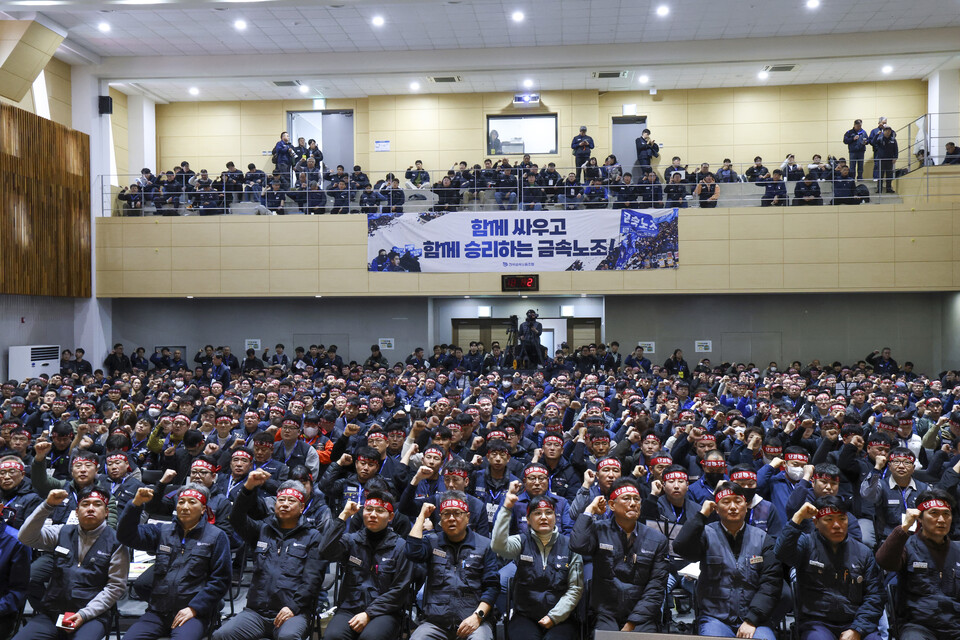
KMWU president Park Sang-Man said:
“Ensuring dignity at work for on-site subcontract, outsourced and subsidiary workers, who have long faced discrimination, is a critical step toward addressing labour polarisation. In 2026, the KMWU will dedicate its full efforts to securing and expanding collective bargaining with principal employers. We urge the government to respect subcontract workers’ right to collective bargaining and abolish the exclusive bargaining representative mechanism.”
POSCO workers submit collective agreement proposal
Meanwhile, 3,500 subcontract workers submitted a collective agreement proposal to POSCO through the Federation of Korean Metalworkers’ Trade Unions (FKMTU) on 10 March. POSCO has acknowledged receipt of the proposal from both FKMTU and KMWU.
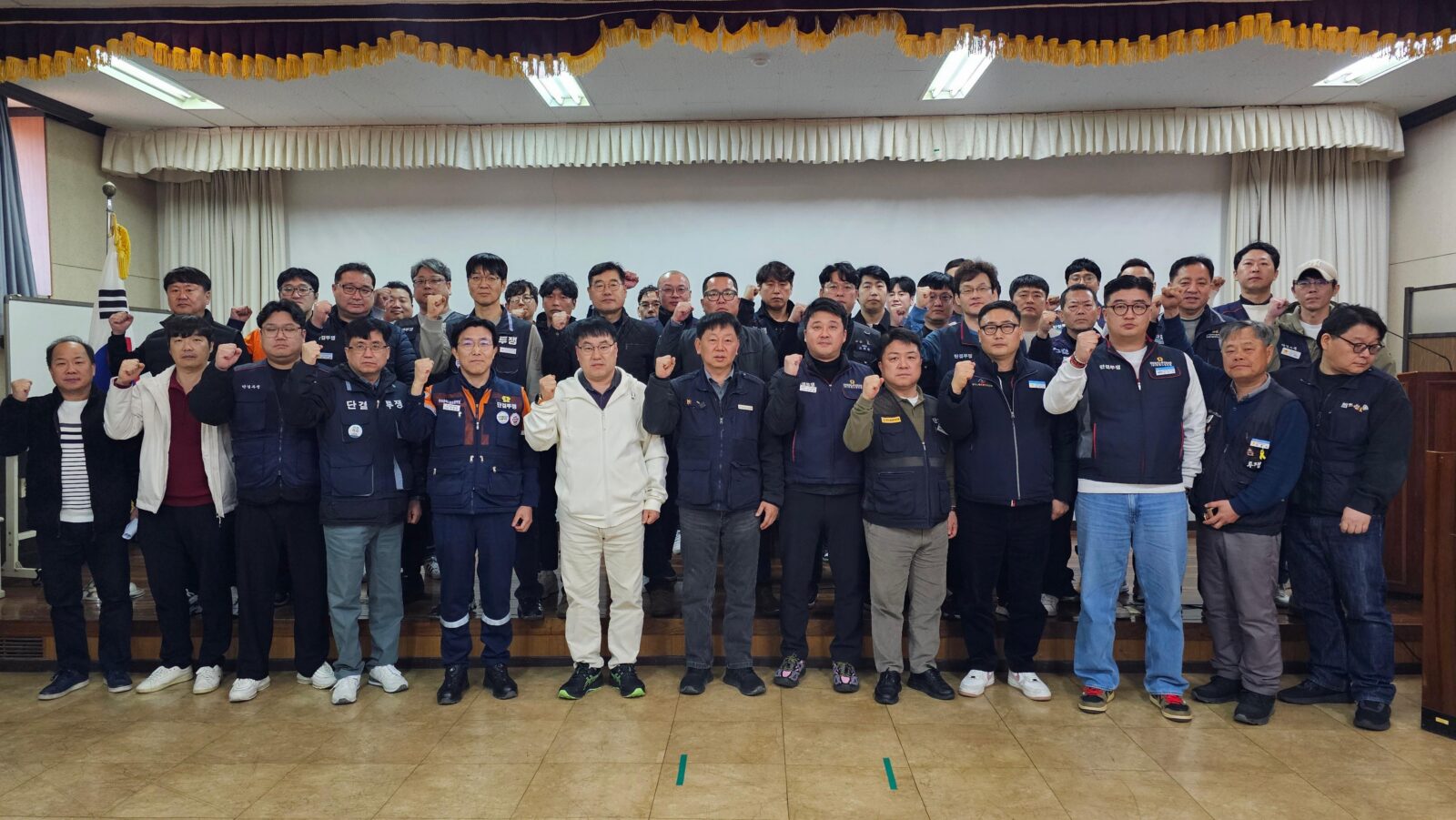
FKMTU president Kim Jun Young said:
“The law amendment serves as an opportunity to open the door to collective bargaining for workers in the Republic of Korea who have not had meaningful bargaining rights. We have only just arrived at the starting line, focusing on safety and health issues. We expect the scope of bargaining to gradually expand.”
